

Topical Authority for Bloggers: How to Own Your Niche in 2027
Most bloggers have had this moment. You publish a post you are genuinely proud of — well researched, well written, properly optimised — and it lands on page three, underneath thinner posts from bigger sites. It is tempting to blame backlinks or domain age and give up on the topic entirely.
But here is what is usually going on: Google does not just rank pages. It builds a picture of what each website is about. A blog with one good article about SEO looks like a blog that mentioned SEO once. A blog that has covered SEO from every angle looks like a blog that knows SEO. That second picture is topical authority, and in 2027 it is the most realistic way for a small blog to outrank bigger competitors.
What Is Topical Authority?
Topical authority is how much Google trusts your website as a source on one particular subject. You earn it by covering that subject properly — the main questions and the smaller follow-up questions — in content that is connected together and clearly written from real knowledge.
It is not a score. There is no topical authority checker and no number in Search Console that tells you yours. It is a pattern Google detects over time, built from three things working together:
- Coverage — you answer the big question and the related smaller ones, not just the obvious head term.
- Connection — your related posts link to each other in a deliberate structure, so Google can see they belong together.
- Credibility — the content shows first-hand experience and honest expertise, the kind of signals covered by E-E-A-T.
Miss one of the three and the pattern breaks. Fifty scattered posts give you coverage of nothing; ten linked posts on a topic you clearly do not understand give you connection without credibility. Topical authority needs all three.
Topical Authority vs Domain Authority
| Domain authority | Topical authority | |
|---|---|---|
| What it measures | Overall strength of a whole domain, mostly from backlinks | How thoroughly a site covers one specific subject |
| Who calculates it | Third-party tools (it is their estimate, not Google’s) | Google, internally, from your content and its connections |
| How you improve it | Earn more and better links over time | Publish complete, interlinked coverage of one topic |
| Can a small blog win? | Hard — big sites have a huge head start | Yes — a focused small blog can beat a general big site on a narrow topic |
That last row is why this matters. You probably cannot out-link a national newspaper. But its single article about sourdough starters competes against your forty connected posts about sourdough — and on that topic, your site is the specialist. Specialists win narrow topics.
Why Topical Authority Matters More in 2027
Three shifts have made topical authority more valuable than it was even two years ago.
First, AI answers cite specialists. When Google shows an AI Overview, or someone asks ChatGPT or Perplexity a question, the sources quoted tend to be sites that clearly specialise in the topic. A focused cluster gives AI systems more of your pages to choose from. Our guide on how to get your blog cited in Google AI Overviews goes deeper on the citation side.
Second, Google’s helpful content signals reward depth over volume. Sites built from disconnected, whatever-is-trending posts are exactly what recent updates have squeezed.
Third, authority compounds. Every new post in a cluster makes the existing posts easier to rank, because each adds coverage and internal links to the others. Scattered posts do not do this for each other.
How to Build Topical Authority: A Step-by-Step Plan
Step 1: Choose one topic you can genuinely own
Pick a subject narrow enough to cover completely and close enough to your real knowledge that you can write about it from experience. “SEO” is too broad for a small blog. “SEO for food bloggers” or “keyword research for beginners” is ownable.
Be honest here. A cluster written from genuine experience will beat one assembled from other people’s top-ten lists, because credibility is one of the three ingredients. Our guide to E-E-A-T for bloggers explains how to make that experience visible on the page.
Step 2: Map every question before you write anything
Before writing a word, list everything a reader might ask about your topic. Use Google autocomplete, the “People also ask” boxes, related searches, your own comments and emails, and questions in forums and groups in your niche. Aim for 30–60 questions. Then group them:
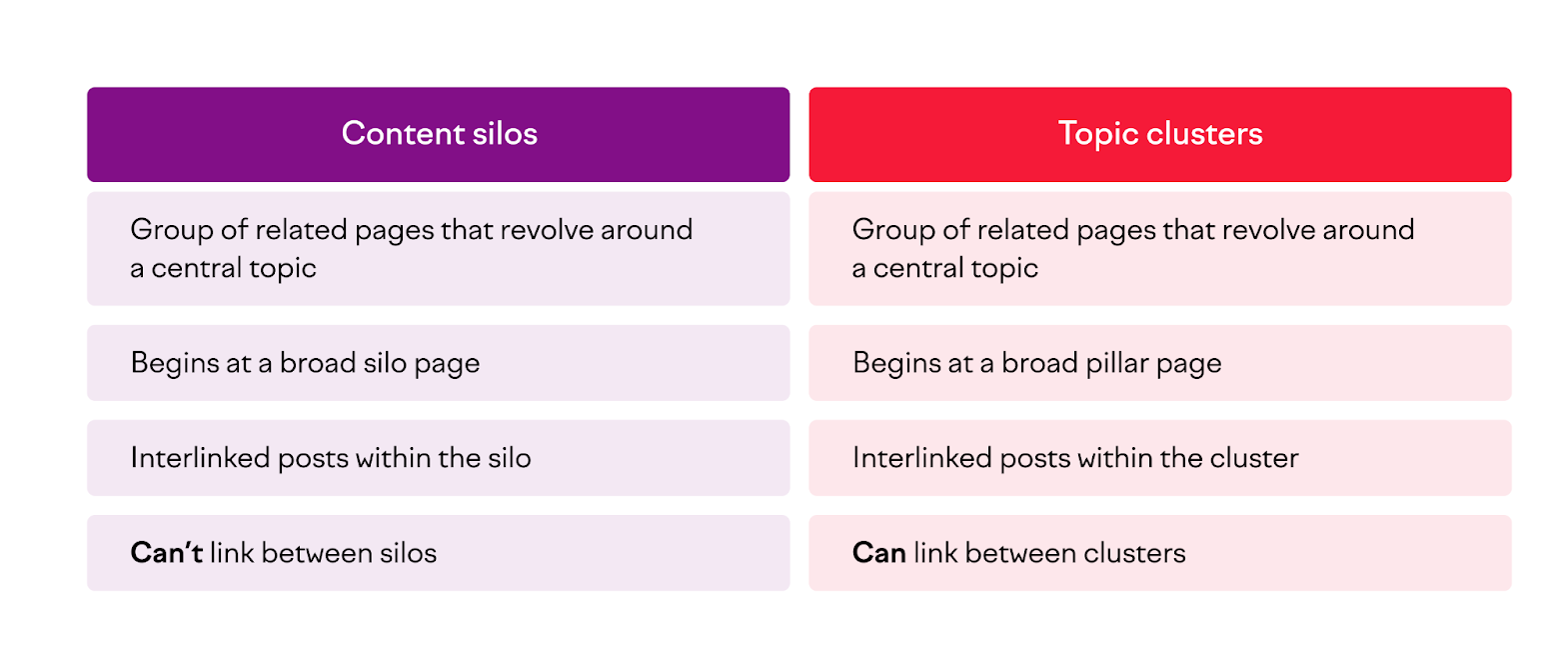
- The broad, defining questions (“what is X”, “complete guide to X”) — these shape your pillar page.
- Grouped subtopics — questions that belong together become cluster posts.
- Duplicates and near-duplicates — merge them now, on paper, so you never publish two posts chasing the same search. (If your blog already has that problem, our guide to keyword cannibalisation shows how to find and fix it.)
This map is your content plan for the next few months. Everything you publish in this period should be on it.

Step 3: Write the pillar page
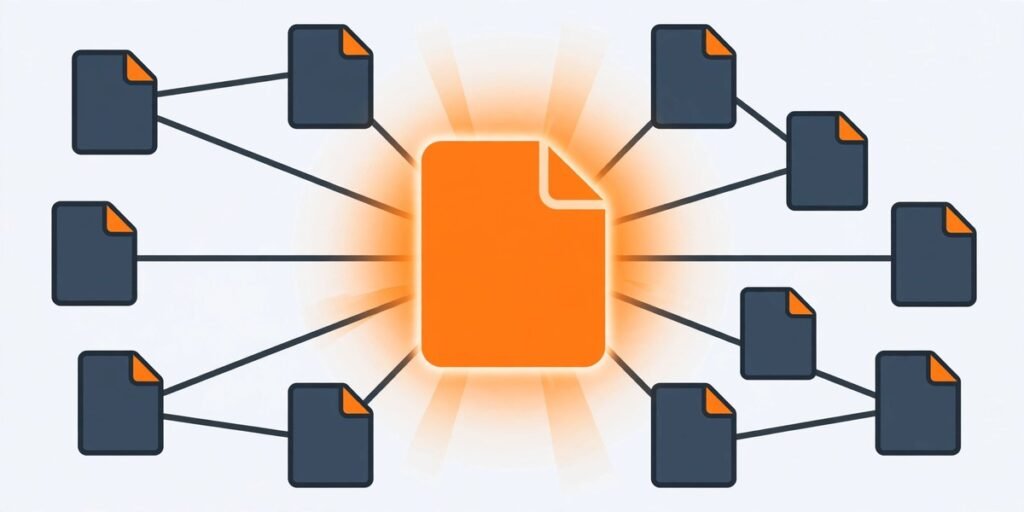
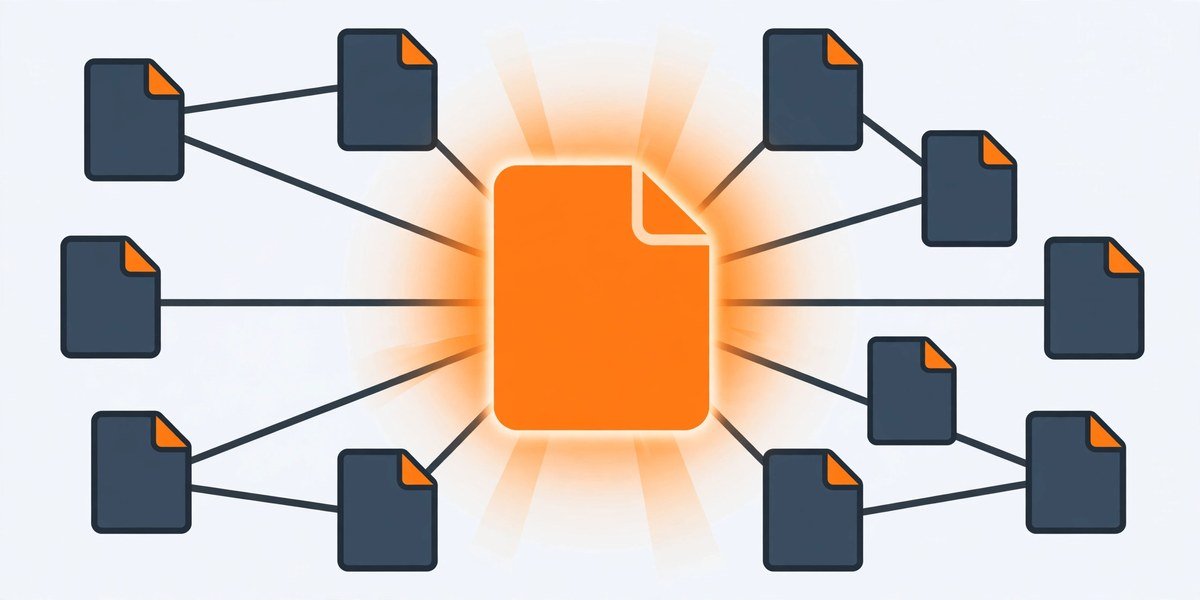
The pillar is one long, broad guide that covers the whole topic at a good level and links out to the detailed posts. It answers the main question properly in its own right, then points readers to the deep dives. Write it early — it gives every cluster post somewhere meaningful to link to from day one.
Step 4: Publish cluster posts in a sensible order
Work through your map, starting with the foundational questions your other posts will depend on, then the practical how-to posts, then comparisons and advanced questions. Each cluster post should do one job completely: answer its question better than anything currently ranking, in your own voice, with your own examples.
A realistic pace for a part-time blogger is one solid post a week. Consistency beats bursts; a steady rhythm sends a stronger signal than four posts in a week followed by two silent months.
Step 5: Interlink the cluster deliberately
Internal linking is the connection ingredient, and it is where most bloggers leave the most value on the table. The rules are simple:
- Every cluster post links back to the pillar page.
- The pillar page links out to every cluster post.
- Cluster posts link sideways to their closest relatives, where the link genuinely helps the reader.
Use descriptive anchor text that tells Google what the target page is about — our complete internal linking strategy for blogs covers the method in full.
Step 6: Keep the cluster alive
Topical authority decays if a topic visibly goes stale. Refresh the pillar and your best cluster posts when facts change, add new posts when new questions appear in your niche, and merge posts that no longer earn their place. Our content refresh checklist shows how to update old posts without losing their rankings.
A Realistic Cluster Plan for a Small Blog
To make this concrete, here is what one cluster actually looks like. Say your blog helps beginners grow houseplants, and your first cluster is “low-light houseplants”:
- Pillar: The Complete Guide to Low-Light Houseplants
- Cluster posts: What “low light” actually means in a home; 12 plants that survive dark rooms; How to tell if your plant needs more light; Watering low-light plants without root rot; Best budget grow lights for beginners; Low-light plants that are safe for cats; Why your snake plant stopped growing; North-facing window plants, room by room
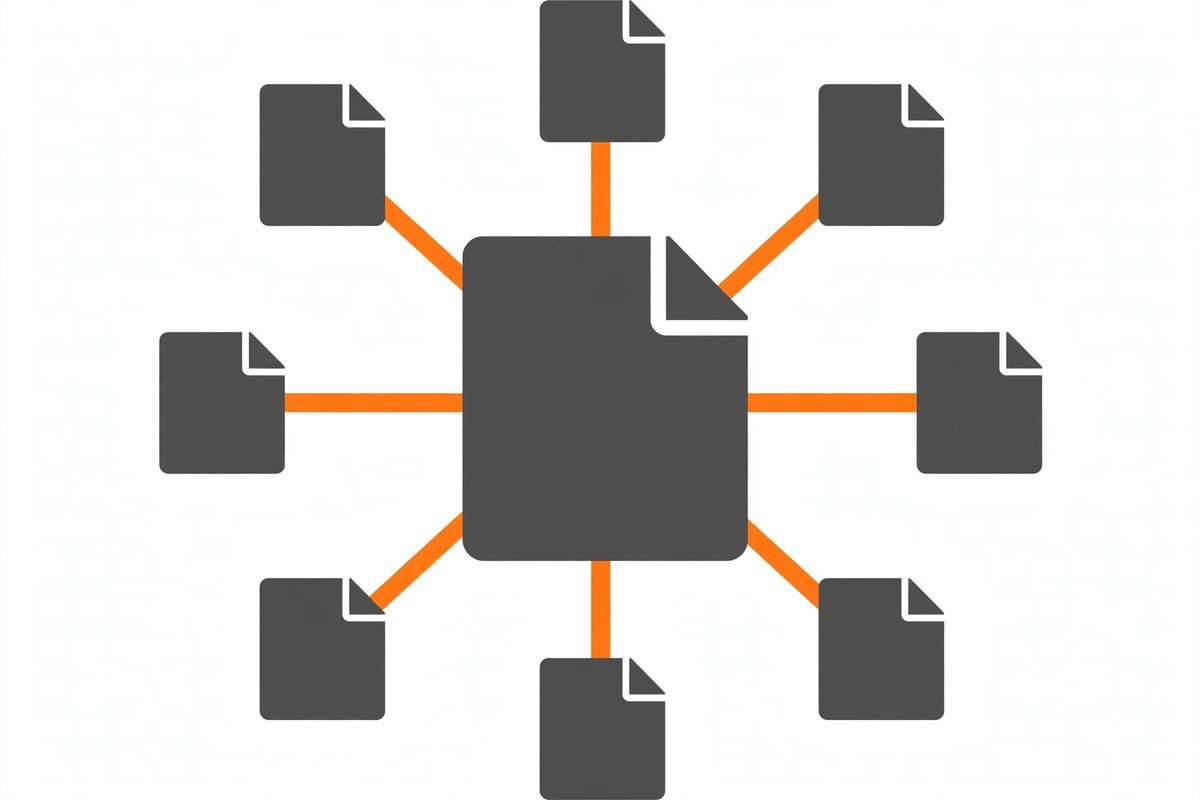
That is one pillar and eight posts — roughly two months at a post a week. You do not need the 75–100 articles some guides insist on. A focused cluster of 10–15 genuinely good, tightly linked pieces is enough for Google to start treating your site as a source on that topic. From there you widen: a second cluster next door (say, “watering and feeding”), then a third, each linked to its neighbours.
We have done a version of this on Click Hype ourselves: every blogging tool is supported by a full guide, all linked through our tools hub and collected in our round-up of 43 free tools for bloggers. Each guide ranks more easily because the others exist.
5 Mistakes That Kill Topical Authority
- Publishing on whatever is trending. Every off-topic post dilutes the picture Google has of your site. A feed that jumps from recipes to crypto to travel is not a niche, it is a drawer of random leaflets.
- Covering a topic once and moving on. One post is a mention, not authority. If a topic matters, it deserves a cluster.
- Thin posts written to “complete the set”. Ten weak posts do less than five strong ones. Coverage means answering the questions, not just having URLs with the right titles.
- No internal links, or links added as an afterthought. An unlinked cluster is invisible as a cluster. Build the links as you publish, not someday later.
- Faking expertise. Invented credentials and rewritten competitor content fail the credibility test — and Google’s guidance on fabricated author profiles has become explicitly harsher. Write what you know, and say what you have actually done.
How to Tell Your Topical Authority Is Growing
There is no score to check, but there are honest signals in Google Search Console:

- More queries per page. A cluster post ranking for dozens of related searches — not just its target keyword — is being understood as part of a topic.
- Cluster pages ranking together. When several posts from one cluster climb at the same time, the cluster is lifting itself.
- Faster indexing. New posts in an established cluster tend to get indexed and tested in results sooner than posts on new topics.
- Citations and mentions. Appearing in AI Overviews, or being quoted by others in the niche, is authority becoming visible.
Expect this to take months, not weeks: a first cluster typically shows these signals within three to six months of steady publishing.
Frequently Asked Questions
How many posts do I need for topical authority? There is no official number. In practice, a tightly linked cluster of around 10–15 quality posts on one narrow topic is enough for Google to start recognising your site as a source on it. More helps, but only if the quality and the linking hold up.
How long does topical authority take to build? For most small blogs, expect the first clear signals — cluster posts ranking for many related queries, faster indexing — within three to six months of consistent publishing. Strong authority in a competitive niche takes longer. It is a compounding asset, not a campaign.
Can a new blog build topical authority without backlinks? Yes. Topical authority is built from coverage, connection and credibility, none of which require backlinks. Links still help a site overall, but a focused new blog can outrank bigger general sites on a narrow topic through depth alone.
Should I delete old off-topic posts? Not automatically. If they get traffic or links, keep them — they do little harm on their own. The problem is a pattern of scattered publishing. Focus your new energy on clusters, and merge or retire old posts that are thin, outdated and unvisited.
Final Thoughts
Topical authority is not a trick or a loophole. It is what happens when a blog does the obvious thing properly: choose a subject, cover it completely, connect the coverage, and keep it alive. That is slower than chasing trending keywords — and exactly why it works as a barrier. Competitors can copy a post in an afternoon. They cannot copy six months of connected depth.
Pick your first topic this week, map its questions, and start with the pillar. Every future post will land on a site Google already trusts a little more on that subject.