


Digital Products Bloggers Can Sell Before They Have a Big Audience

Most bloggers wait far too long to sell anything: grow the audience first, then worry about money. But the audience never feels big enough.
The truth: you do not need a big audience to sell digital products — just a small group of people with one specific problem, and a product that solves it. Ten readers who want a budget spreadsheet beat a thousand casual visitors who will never buy.
What Is a Digital Product?
A digital product is something you create once and sell as a file or online access: a PDF, a template, a spreadsheet, a short course, a set of photos. The buyer pays and receives it instantly — no stock, no postage.
That is why digital products suit bloggers: you already research, write and explain clearly, and a product is simply that knowledge in usable form. Unlike affiliate income, it is yours — you set the price and keep most of the money.
Why Small Blogs Can Sell Digital Products
Needing thousands of readers before selling anything is a myth: what sells a product is a match between one person’s problem and your solution.
Small blogs have three real advantages. You know your readers: you can see which posts get comments and which questions land in your inbox. Your readers trust you more: a small blog feels like a person, not a publication. And marketplaces bring the traffic: millions already search Etsy for printables.
The honest caveat: digital products are not passive income on day one. Making the file is the easy half; getting it in front of buyers takes real work — the same writing and sharing you already do, pointed at a product page instead of a post.
7 Digital Products Bloggers Can Sell Before They Have a Big Audience
Not every digital product suits a small blog — a full course takes weeks to make and needs buyer trust. The seven below run from easiest to hardest.
1. Printables and Planners
Printables are files buyers print at home: wall art, planners, checklists, meal plans, habit trackers. They are the simplest product to make — a clean Canva design exported as a PDF — and they sell because buyers can see exactly what they get at a low price.
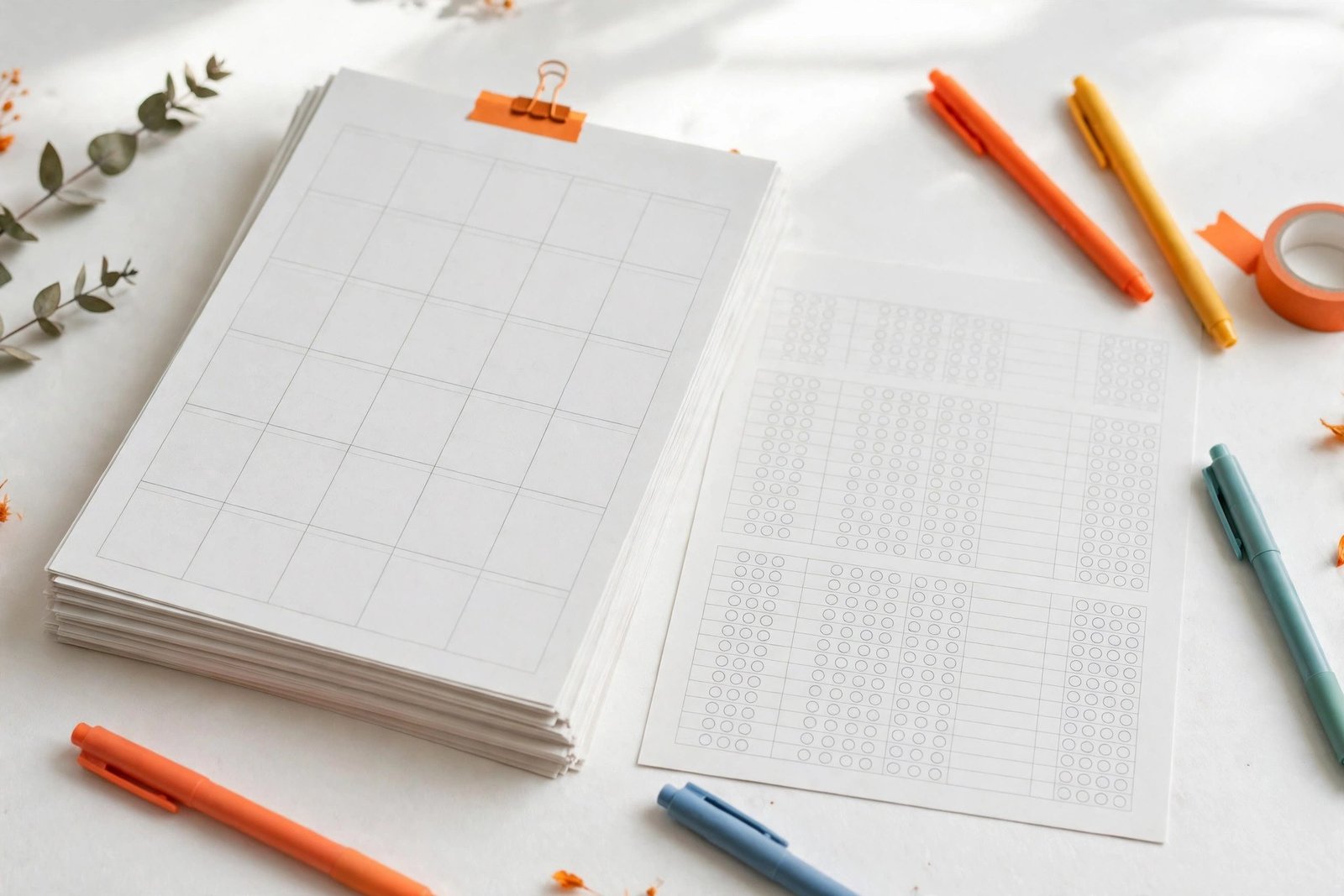
Best for: lifestyle, parenting and teaching blogs. Typical price: £3–£12, or £15–£30 for a bundle. Where to sell: Etsy.
2. Templates
Templates save the buyer time: instead of a blank page, they get your structure and fill in their own details. Canva templates, Notion templates, spreadsheet templates, pitch emails — all sell, because buyers pay to skip the setup work. You already make them for yourself: the content calendar you built for your blog, or the pitch email that landed your first sponsored post, is a product other bloggers will pay for.

Best for: blogging, business, design and productivity blogs. Typical price: £9–£29 for Canva templates, £9–£49 for Notion. Where to sell: Etsy or Gumroad.
3. Short Guides and Ebooks
An ebook sounds huge, but a useful guide need not be 200 pages: a 20- to 40-page PDF answering one question properly is a genuine product. The key is specificity — “How to Blog” competes with everything, while “How to Write Your First 10 Blog Posts in a Weekend” competes with almost nothing.
Not sure what to write about? Look at the questions readers already ask — our guide to coming up with blog post ideas shows how to mine comments and emails for them.
Best for: any blogger with a clear, teachable skill. Typical price: £5–£25. Where to sell: Gumroad, Payhip, or your own blog.
4. Checklists and Workbooks
A checklist is a guide with the fluff removed: the exact steps, in order, with boxes to tick. A workbook adds space to work through a process — fill-in tables, prompts, planning pages. A 5-page checklist built from a post you have already written can be ready in a weekend.
Best for: any niche with a repeatable process to share. Typical price: £5–£19. Where to sell: Gumroad, Etsy, or bundled with a guide.
5. Spreadsheets and Trackers
If you build a spreadsheet for everything, you are sitting on products. Budget trackers, debt payoff planners, habit trackers, invoice trackers — all sell steadily, because buyers get a tool that does the maths for them. They are easy to improve, too: version two can add a tab or a chart, and existing buyers get the update free.
Best for: finance, business, productivity and fitness blogs. Typical price: £7–£39. Where to sell: Etsy or Gumroad.
6. Stock Photos and Lightroom Presets
If you take good photos for your blog, those photos are products: recipe photo packs, destination bundles, the Lightroom presets that give your photos their look. Presets sell on the strength of your images, not your audience size — before-and-after examples do the selling for you.
Best for: photography, food, travel and lifestyle blogs. Typical price: £9–£35 for a preset pack, £15–£49 for a photo bundle. Where to sell: Etsy or Gumroad.
7. Mini-Courses and Workshops
A mini-course is a short course on one skill: a few private videos plus a PDF workbook, or a workshop you already ran live. It takes days, not months. The honest warning: courses are the hardest product here to sell with no audience — make this your second or third product.
Best for: bloggers who already teach in their posts. Typical price: £19–£79. Where to sell: Gumroad, Teachable, or your own blog.
How to Pick Your First Product
With seven options, the temptation is to build all of them. Do not — pick one, using three questions.
What do readers already ask you for? Check your comments and DMs: if three people asked for your meal-planning spreadsheet, that is your product.
What can you finish in a weekend? Your first product’s job is to teach you how listing, pricing and delivery work — cheaply. A small product you finish beats a big one you abandon.
What are you already good at? Design in Canva daily? Make templates. Live in spreadsheets? Make trackers. Still deciding your direction? Our guide to choosing a blog niche helps you find the overlap between what you enjoy, what you know, and what people will pay for.
Where to Sell: Etsy vs Gumroad vs Your Own Blog
Etsy brings the shoppers. Millions search Etsy every day for printables and templates — you do not need an audience, because buyers are already there. The trade-off: a $0.20 listing fee, a 6.5% transaction fee, plus processing, and Etsy owns the customer relationship.
Gumroad gives you control. You host products there and drive your own traffic. It handles payments, file delivery and analytics, and you collect buyer emails to build a list. The free plan takes 10% plus $0.50 on direct sales.
Your own blog is the long game. Selling from your own site means no platform fees and full control, but you bring all the traffic yourself — so start on Etsy or Gumroad and add your own store later. Your email list ties it together: invite every buyer onto it, because that list is the audience for your second product. Our guide to starting an email list from zero subscribers walks through the setup.
How to Price Your First Digital Product
Start between £5 and £29 — the range where a stranger buys on impulse. Below £5, platform fees eat most of the sale: on a £3 product, fixed fees can take a third of it. Above £30, buyers hesitate.
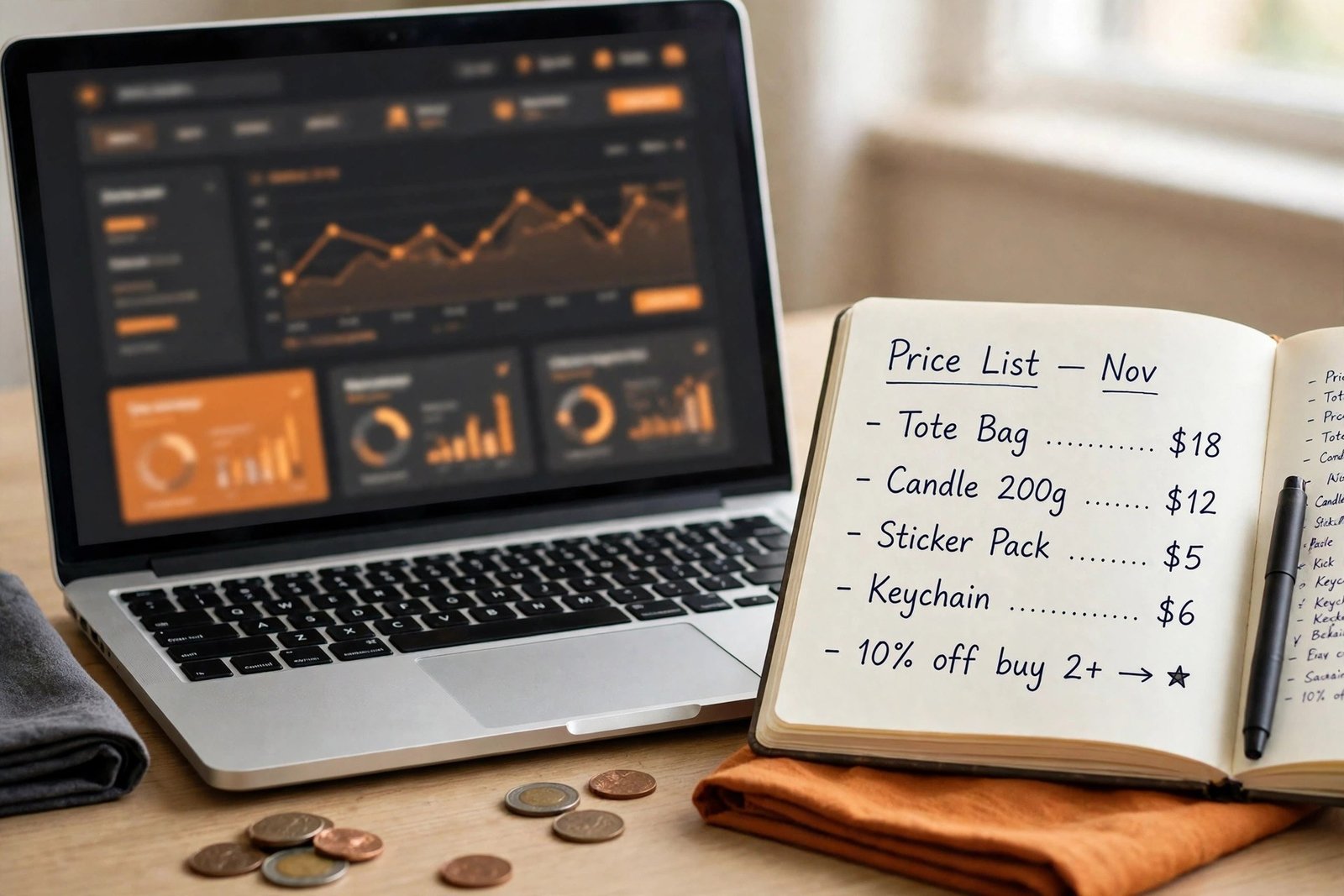
Work out the fees before you price, not after. On Etsy, a £10 sale keeps roughly £8.85 after fees; on Gumroad’s free plan, roughly £8.15. Rough figures that vary by country — but cheap products are a hard way to make real money.
Bundles beat single files: a £7 planner becomes a £24 bundle with a habit tracker, a meal plan and a budget sheet added. And do not underprice to “get sales” — a £2 product does not sell faster than a £12 one. Price for the problem you solve, not for your doubts.
How to Get Your First Sales Without a Big Audience
Write about the problem, not the product. A post that ranks for the problem — “how to plan meals on a budget” — brings buyers far better than one that says “buy my meal planner”. A blog content calendar helps you plan posts around your launches.
List where buyers already search. On Etsy, use titles and tags with the exact words buyers type: “printable weekly meal planner PDF”, not “my cute planner”. On Gumroad, show a preview, a list of what is inside, and a realistic mockup.
Give a free sample. A free one-page version of your planner, or the first chapter of your guide, proves the quality and grows your email list. It pairs naturally with affiliate income too — our affiliate marketing guide for beginners covers how the two work together.
Tell the people who already asked — and keep showing up. If someone emailed asking for your template, email them back when it exists: your first five sales will almost always come from people you have already talked to. A small audience that hears about a good product ten times beats a big audience that hears about it once.
Common Mistakes to Avoid
Building before validating. Spending a month on a course nobody asked for is the classic mistake. Ask first, build second.
Making it too big. Your first product should solve one problem, not ten. A 100-page ebook takes three months and sells worse than a focused 25-page guide. And show buyers what is inside: a page with no preview images will not sell, however good the file is.
Copying someone else’s product. A near-identical copy of a bestselling planner starts a race to the bottom on price. Your version needs one clear difference: your niche, your style, your audience.
Frequently Asked Questions
Can I sell digital products with no audience at all?
Yes — if you sell where buyers already search. On Etsy, buyers search for printables by name, so a well-listed product can sell to strangers. Courses need trust, so start with a template or checklist.
What is the easiest digital product to sell as a beginner?
Printables, checklists and simple templates: a day or two to make in Canva, cheap to price, and buyers can see what they get. Short guides come next; courses should wait until you have happy customers.
How much money can a small blog make from digital products?
Honestly, the first product usually earns tens of pounds, not hundreds — and that is normal. A £12 template selling five times a month is £60 a month from a file you made once. Income grows as you add products. Real income, but not overnight income.
Do I need a business or tax registration to sell digital products?
In most countries, no — not on day one. Start as an individual and register when sales become regular income. Etsy collects sales tax as the marketplace, and Gumroad acts as merchant of record. Check local rules first.
Etsy or Gumroad — which is better for a small blogger?
Etsy suits printables, planners and templates, because it brings shoppers to you. Gumroad suits ebooks, Notion templates and courses, because you keep the customer relationship and email addresses. Many sellers use both: Etsy for discovery, Gumroad for repeat buyers.
The Bottom Line
You do not need a big audience to sell digital products — one specific problem, one product that solves it, and a place where the people with that problem already look. Start small: a printable, a template, a checklist. Finish it in a weekend, price it between £5 and £29, list it where buyers search. Then write about the problem and give away a free sample.
Your first sale will probably come from someone you already know, for less than you hoped. That is fine: it proves the system works. Do it again, a little better — that is how small blogs become businesses.