

How to Plan a Blog Series That Keeps Readers Coming Back
Most blogs lose readers the same way: a good post gets read once, enjoyed, and forgotten. The reader never comes back — not because the writing was bad, but because nothing gave them a reason to. A blog series fixes that: every post promises, and points to, the next one.
A blog series is a planned sequence of posts on one theme, published in a deliberate order, each able to stand on its own while adding up to something bigger. Done well, it is one of the most reliable ways to grow a small blog: it gives readers a reason to subscribe, gives search engines a clear cluster of related pages, and gives you a publishing plan that writes itself for weeks.
What Is a Blog Series?
A blog series is a set of related posts published over time under one theme, usually numbered “Part 1”, “Part 2” and so on. Each post answers one question or covers one step, and together they cover a topic in a depth no single article could manage.
It differs from a content pillar — a broad theme your blog returns to for months or years — in that a series is one short, focused run inside it: five posts over five weeks that take a reader from beginner to confident on one specific skill.
Why a Blog Series Works So Well
It gives readers a reason to return. A standalone post ends with a full stop; a series post ends with a next step. That repeat-visit habit is what turns casual search traffic into an audience.
It builds topical authority faster. Google rewards blogs that cover a topic thoroughly rather than skimming it once, and five or six interlinked posts on one theme send a much clearer signal than five unrelated ones. Our guide to topical authority explains why this focused coverage matters.
It creates natural internal links. Every post in a series links to the one before and the one after — exactly the linking structure search engines like, as our guide to internal linking strategy explains. One big idea also becomes five publishable posts with titles and outlines already decided — a ready-made block in your blog content calendar.
Step 1: Choose a Theme That Can Carry a Series
Not every topic deserves a series. A good theme passes three tests.
First, it must be broad enough to split into at least four genuinely different posts. If you cannot list four distinct angles without repeating yourself, the theme is a single post. “How to start a blog” splits easily — niche, setup, first posts, promotion, monetisation. “How to write a good headline” does not.
Second, it must be narrow enough to finish. A theme like “everything about blogging” never ends, and readers can tell when a series has no destination. A good series has a clear end point: by the final post, the reader can do something specific they could not do before — that is the promise the series makes.
Third, it must match a problem your readers actually have. The best themes come from questions readers already ask — in comments, in your inbox, in the search queries your blog attracts. If you are short of ideas, our guide on how to come up with blog post ideas covers a method for finding them; the same method works for series themes.
Write the theme as one sentence — who it is for, what problem it solves, what the reader can do at the end. If you cannot write that sentence, the theme is not ready yet.
Step 2: Map the Reader’s Journey Before You Write
Most failed series are written one post at a time, with the writer deciding what comes next only after publishing the last part. The result wanders, repeats itself, and quietly fizzles out at part three.
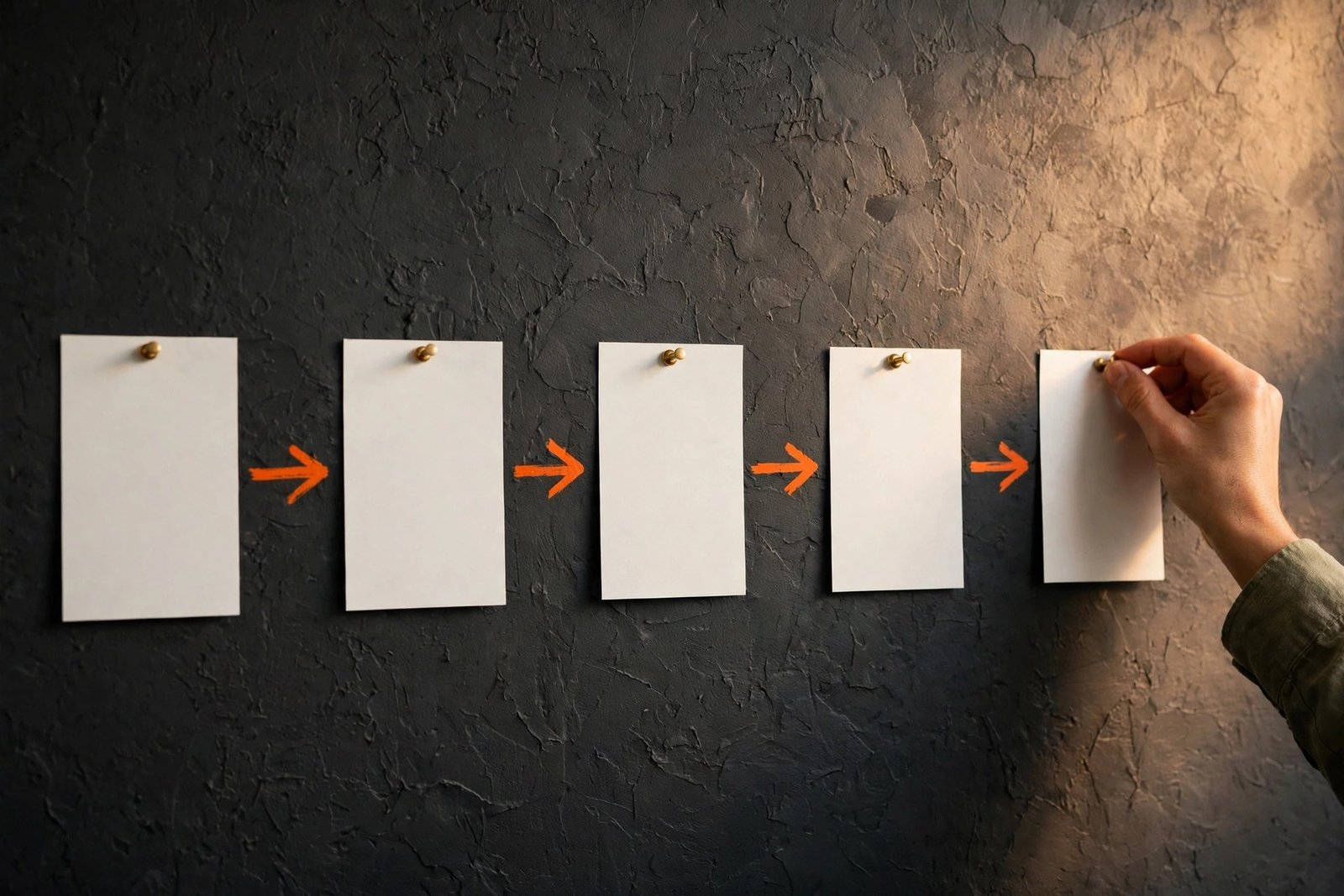
Plan the whole series before you write part one. For each instalment, decide the question it answers, the keyword it targets, and the outcome the reader gets. Then check the flow: does each post build on the one before, and does the order make sense for a beginner?
A structure that works for most blogs:
| Part | Job | Example |
|---|---|---|
| 1 | The problem and the promise | Why blogs stall — and what will change |
| 2 | The foundations | The basics the reader needs first |
| 3 | The core method | The main how-to, step by step |
| 4 | The mistakes and fixes | What goes wrong, and how to recover |
| 5 | The next level | Advanced tips, and what to do next |
Five parts is a good default. Three can feel too short to justify the “series” label; more than seven and readers lose the thread — and you lose the will to finish. If a theme needs more than seven posts, split it into two series.
Step 3: Give the Series a Name and a Consistent Format
Readers cannot follow a series they cannot recognise. Give yours a clear name that appears in every title, and keep the titles consistent — five posts with five unrelated titles will not be connected by anyone.
Keep the same structure in each instalment: a short recap, the main content, a “what you have learned so far” line, and a preview of the next part. Readers settle into a rhythm, and that rhythm is part of what brings them back.
Create a series hub as well: a short page, or a section at the top of part one, listing every instalment with a one-line description, updated as new parts go live. It gives new readers a starting point and you one link to share whenever you promote the series.

Step 4: Set a Schedule You Can Actually Keep
A series lives or dies on its schedule: if the next part does not arrive when expected, readers stop checking.
Pick a rhythm you can sustain for the whole series, then announce it in part one. Weekly is the most common choice and the easiest to remember: “Part two arrives next Tuesday.” Fortnightly works for long, research-heavy posts; daily only for short series where every part is written before you start.
Be honest about your capacity: a five-part weekly series is five weeks of committed publishing, on top of everything else your blog needs. If that sounds like too much, shorten the series or publish fortnightly. Our guide to blogging consistency covers a sustainable publishing rhythm — and the same advice applies here: a schedule you keep beats an ambitious one you abandon.
Write at least the first two parts before publishing part one, and outline the rest. That buffer protects you when life gets in the way, and stops quality dropping halfway through — where most series lose their readers.
Step 5: Link Every Part to the Next — and the Previous One
Links are the machinery of a series: without them, you have five separate posts that happen to share a theme.
Every instalment should link backwards to the previous part and forwards to the next one, in the body of the post as well as in a short navigation block at the top or bottom. Link in context — “as we covered in part two” — rather than relying on a list at the end that readers may never reach.
When the next part does not exist yet, say when it is coming instead: “Part four arrives next Tuesday.” Then, when part four goes live, go back and update part three with the real link, so a reader who finds it months later can follow the chain in one click.
The same applies to promotion: each new part is a chance to bring readers back to the earlier ones, and each part can be repurposed into a week of content that keeps the whole series visible.

Step 6: Keep Readers Between Instalments
The gap between parts is where series lose people: a reader who enjoyed part two on Tuesday will not automatically remember to return next Tuesday.
Email is the strongest tool here. If you have a list, send a short email when each part goes live. If you do not have one yet, a series is a good reason to start — a “get the next part by email” box at the end of each instalment converts well because the offer is specific and immediate. Our guide on how to start an email list covers the setup from zero subscribers.
End each part with a hook, not a summary. A summary closes the post; a hook opens the next one. Tell readers exactly what the next part will solve — readers return for answers to problems they recognise, not for vague promises of “more”.
Step 7: Finish Strong — Then Measure What Happened
The last part deserves more effort, not less: it should deliver the final step, summarise what the series taught, and tell the reader what to do next — a related guide, a tool on your blog, or your next series. A series that ends with a shrug wastes all the attention it built.
Once the series is complete, measure it as a whole, not just the first post: how many readers of part one went on to read the later parts? Did it bring readers back week after week? How many joined your email list from series posts, and are the posts ranking for their keywords?
If the series worked, you have a format to repeat. If it did not, the numbers tell you where it failed: a weak part one, a gap in the schedule, or a theme that could not carry five posts.
Common Blog Series Mistakes
Starting before the plan exists. Publishing part one with no idea what part three will cover is how series die at part two.
Making every part depend on the one before. A reader who lands on part four from search should still get value — keep each post self-contained, with a short recap and a link back.
Letting the schedule slip silently. If a part is late, say so, with the new date. Readers forgive a delay they are told about; they do not forgive a series that simply stops.
Repeating the same post five times. If your instalments all say the same thing in slightly different words, you have one post stretched thin, not a series.
Frequently Asked Questions
What is a blog series?
A blog series is a planned sequence of related posts on one theme, published in a deliberate order. Each post stands on its own but also adds to a bigger whole, with links guiding readers from one part to the next.
How many posts should a blog series have?
Five is a good default: three is the minimum for the “series” label to feel earned, and more than seven risks losing readers — and your own momentum.
How often should I publish each part of a series?
Weekly works best for most blogs: frequent enough to hold attention and realistic enough to sustain. Fortnightly suits longer posts. Whatever you choose, announce it in part one and keep it.
Does a blog series help with SEO?
Yes. A series creates a cluster of interlinked posts on one topic, which helps search engines understand your expertise on that theme, and each part can target its own keyword.
Final Word
A blog series is not a trick for getting more page views. It is a promise: this topic is worth your time, I have thought about the order, and the next part will be here when I said it would. Keep that promise a few times and readers stop being visitors and start being regulars.
Start small: pick one theme your readers already ask about, map five parts, write the first two before you publish the first, and set a schedule you can keep. The series does not need to be perfect — it needs to be planned, finished, and worth returning for.