


AI Content Checker: What the Score Really Means

An AI content checker is a tool that scans a piece of writing for patterns commonly found in machine-generated text: predictable word choices, evenly paced sentences, phrases that repeat a little too neatly. It then tells you how strongly those patterns show up, usually as a percentage or a plain-language indication.
Here is the part the marketing pages tend to skip: that number is a probability, not proof. No checker anywhere can read a finished paragraph and state with certainty who, or what, wrote it. What a checker can do is point at weak, generic writing and give you a nudge to improve it. That is a genuinely useful job. It is just a smaller job than the adverts claim, and this guide explains how to get the useful part without falling for the rest.
How AI Detection Actually Works
Strip away the sci-fi language and every detector does roughly the same thing: pattern-matching against what AI writing usually looks like.
The biggest tell is predictability. A language model writes by choosing, word after word, the most likely next word. Text that keeps making the “expected” choice reads as machine-like to a detector. Human writing is messier. We swerve, we use odd words, we start sentences we clearly hadn’t planned the end of.
The second tell is sentence variety, sometimes called burstiness. A person writes one long, winding sentence that gathers three ideas along the way. Then a short one. Detectors notice when every sentence lands at roughly the same length, marching along at an even pace, because that is how models tend to write by default.
On top of those, checkers look for repeated phrasing, stock transitions and a suspicious absence of specifics. Some use trained classifiers that have been fed thousands of known human and AI samples. Either way, the important thing to understand is what this process isn’t: it is not a fingerprint test. The detector has never met the author. It has only met the text, and it is making an educated guess from surface patterns.
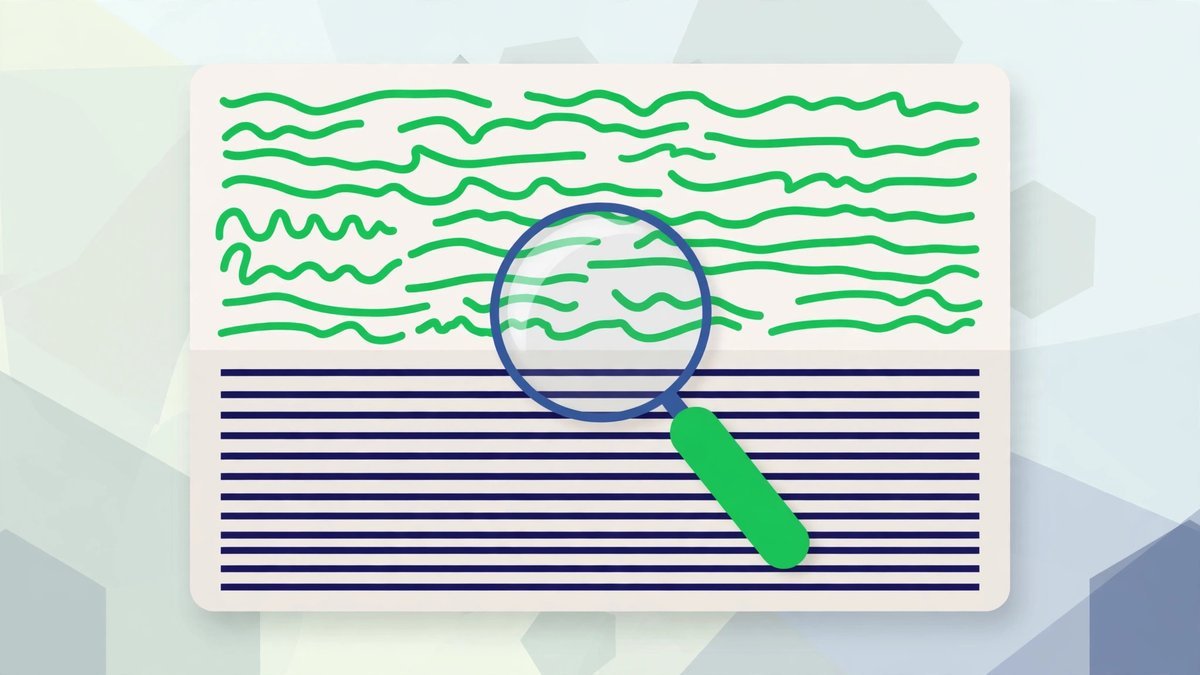
What Our Checker Looks For
Click Hype’s checker takes the signal-based approach, and we describe it that way on purpose. It examines the patterns detectors actually rely on — how much your sentence lengths vary, how often words and phrases repeat, how predictable the phrasing is — and reports an indication: the text reads mostly human-like, it shows mixed signals, or it carries strong AI-like patterns.
It will not give you a verdict, because a verdict is the one thing no honest checker can offer. If you have a draft you are unsure about, our free AI content checker will show you which signals it is picking up, and the rest of this guide explains how to act on that without panicking.
How to Use the AI Content Checker
The check itself takes under a minute. Using it well is mostly about what you feed it and what you do with the result.
- Open the AI content checker and paste in a finished draft — several hundred words at least. Short samples are unreliable; a headline and two sentences give any checker almost nothing to work with.
- Read the breakdown, not just the headline score. Which signals were flagged matters more than the number.
- Look at the passages that drew attention and ask a simpler question: is this bit actually any good? Vague, or could-be-about-anything writing is what you are hunting.
- One instructive test: run a paragraph you wrote years ago, long before AI writing tools existed. Plenty of people find their own pre-2023 words flagged. Remember that feeling next time you are tempted to treat a score as gospel.
The False-Positive Problem Is Real
A false positive means human writing flagged as AI, and it is not a rare edge case. It follows a pattern, and the pattern is unfair: the writers most likely to be flagged are careful human writers, non-native English speakers, and anyone working in a formulaic genre.
Consider the method section of a cake recipe: “Preheat the oven to 180°C. Grease and line a 20cm tin. Fold the flour into the batter until just combined.” Short sentences. Plain vocabulary. Entirely predictable — because a recipe is supposed to be predictable. Feed that to a detector and there is a decent chance it comes back smelling of robot. The same goes for instruction manuals, legal summaries, product specifications and straightforward how-to steps.
Now think about a blogger writing in her second language. She writes carefully, in correct, simple English, with even sentence lengths and a safe vocabulary — exactly the profile detectors are trained to suspect. Her reward for writing clearly is an accusation generated by a probability score.

False negatives are just as common. AI text that has been lightly edited, or generated with instructions to vary sentence lengths, sails through most checkers untouched. So the score fails in both directions: it flags innocent humans and waves guilty machines through. Knowing that, you can calibrate how much weight it deserves — which is some, as a writing prompt, and none, as evidence.
What Google Actually Says About AI Content
This is where a lot of the fear comes from, so it is worth stating Google’s position accurately. Google rewards helpful, reliable, people-first content however it is produced. Using AI to help you write is not, in itself, against its guidelines.
What fails is mass-produced, low-value content created mainly to manipulate search rankings — pages with nothing original to say, whoever or whatever wrote them. A human can produce that rubbish at a desk in Scunthorpe just as efficiently as a script can, and a genuinely useful, experience-led article does not become spam because a tool helped draft it. Google’s systems are judging the page’s value and trustworthiness, not running an authorship inquisition.
That is why the things that actually protect your rankings are the unglamorous ones: first-hand experience, real results, named sources, opinions you can defend. Our guide to E-E-A-T for bloggers walks through how to put that experience on the page where both readers and search engines can see it.
A Sensible Editing Workflow for Bloggers
Here is how the checker earns its place in a normal workflow, as the last-but-one pair of eyes rather than a border guard:
- Draft the way you normally draft. Outline, write, get your own experience and examples in. Do not write for the checker.
- Run the check near the end. Treat a strong AI-like reading as a “generic-o-meter” going off. Somewhere in that draft is writing that could describe anyone’s blog on the subject.
- Fix with substance, not cosmetics. The cure for flagged passages is specifics: the number you actually got, the mistake you actually made, the screenshot, the named tool, the date. Add what only you know.
- Check readability separately. Once the content says something real, run it through a readability checker to make sure it also reads easily — the two checks catch different problems, and a post needs to pass the human one.
If you start from an AI-assisted draft, the same rules apply with the order reversed: your job is to add the experience, not merely disguise the machine. A pass through an AI text humanizer can break up monotonous phrasing and vary the rhythm, which is fine as far as it goes — but no rewording tool can invent the afternoon you spent testing something, and that afternoon is the part Google and your readers actually value.

If Your Own Writing Gets Flagged
Sooner or later it happens to most bloggers, and the correct response is mild annoyance followed by useful editing — not a rewrite in a panic.
First, keep your process evidence as a matter of habit: dated drafts, research notes, and the version history in your writing app. That trail shows how a piece developed over days, in a way generated text simply doesn’t. If an editor or client ever queries a score, that history is your answer, and it is a far stronger one than arguing with a percentage.
Second, look at the flagged passages with fresh eyes. Sometimes the checker is wrong and the paragraph is fine. Sometimes it has accidentally done you a favour, and the passage really is bland. Improve its specificity — add the detail, the figure, the example — rather than contorting your natural style to look “more human” to an algorithm. Writing deliberately weirdly to beat a detector is a strange hill for a writer to die on.
Common Mistakes When Using an AI Checker
- Treating the percentage as a verdict. It is an indication from pattern-matching, nothing more. No score, high or low, proves authorship.
- Rewriting good human text to please a checker. If your clear, correct paragraph gets flagged and you mangle it into something worse to lower the number, the tool has just edited your blog — badly.
- Checking tiny samples. Fifty words cannot carry enough signal. Scores on short text swing wildly and mean little.
- Using a score as an accusation. Rejecting a freelancer’s work, or doubting a student’s, on the strength of a checker alone is unfair and evidentially baseless.
- Assuming a low score means rewards and a high score means a penalty. Google does not rank by detector results. Helpful content ranks; thin content doesn’t.
Frequently Asked Questions
Can an AI content checker prove that a text was written by AI?
No. Checkers match patterns and produce probabilities. They can say a text resembles machine-generated writing; they cannot establish who wrote it, and both false positives and false negatives are common.
Why did my own writing get flagged as AI?
Usually because it is tidy: even sentence lengths, common vocabulary, a formulaic structure. Recipes, instructions, technical writing and careful second-language English all trigger flags regularly. It says something about the text’s patterns, not about you.
Does Google penalise AI-generated content?
Not as such. Google rewards helpful, reliable content however it is produced, and its spam policies target low-value, mass-produced pages made to manipulate rankings. Thin content fails; the tool used to draft it is not the deciding factor.
What score should I aim for?
There isn’t one. Chasing a target number leads writers to degrade good text. Aim for writing that contains things only you could have put in it, and let the score be whatever it is.
Should I rewrite a passage that scores as AI-like?
Only if it also reads as generic to you. If the passage is vague, fix it by adding specifics and experience. If it is clear and accurate, leave it alone — you are the editor, the checker is not.
Final Thoughts
An AI content checker is best understood as a mirror, not a judge. It can show you where your writing has gone flat, formulaic or strangely anonymous, and that is worth knowing before you publish. It cannot tell you who wrote a text, it cannot protect you from publishing something dull, and it should never be the reason good writing gets binned.

So use it in its place: at the end of the process, for thirty seconds, as a prompt to make weak passages stronger. Run your next draft through our AI content checker, look at what it flags, add the specifics only you know — and then publish the piece your readers actually came for.